
Airtel ODU · Nigeria
Proving Demand Before Scaling Nationally
Airtel ODU was entering a Nigerian connectivity market already served by MTN, Glo, and Smile. Instead of a broad national launch, I helped design a Lagos pilot: two targeted outreach campaigns that tested whether real organizations, not hypothetical users, would actually say yes.
 123456
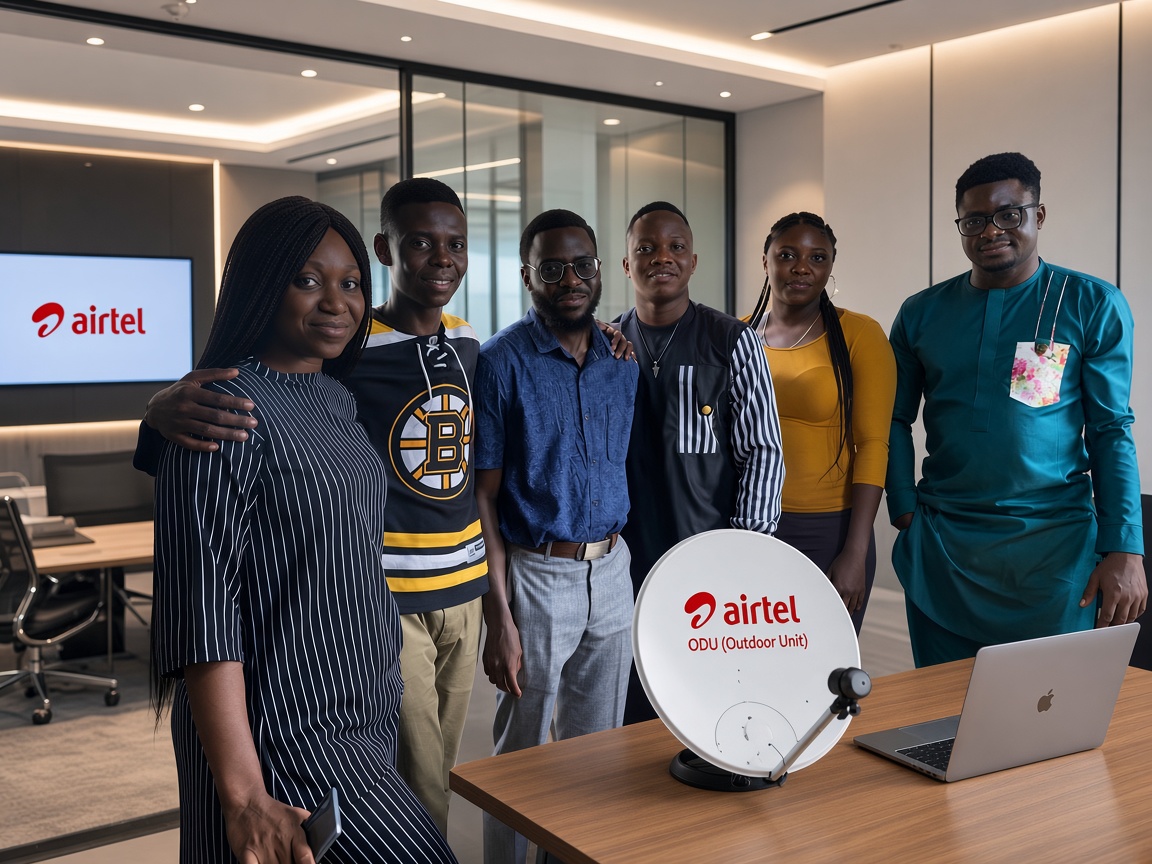
The Pilot Team
The Problem
A Crowded Market Isn't an Empty One
Poor indoor signal and unreliable connectivity are common across Nigeria, in rural areas far from towers and in urban commercial hubs alike. That problem was already visible. What wasn't settled was whether Airtel could win share in a market where MTN, Glo, and Smile were already established, and where a new hardware device is an easy thing for a buyer to say no to.
The research question wasn't “does Nigeria need better connectivity.” It was: which organizations feel this pain acutely enough, and specifically enough, that a free device with pay-as-you-go data would get a real yes instead of a polite maybe?
Go-to-Market Approach
Validate in One City First
Rather than a single national campaign, the plan started narrow: prove real demand in Lagos with organizations that had an urgent, specific reason to need better connectivity, then use that as the evidence base for a national rollout.
01
Lagos Pilot
Target real organizations, not the general public
02
Segment Validation
Two outreach campaigns, direct qualifying questions
03
National Rollout
Scale what was proven to convert
Research Method
Outreach, Not a Generic Survey
Instead of running one broad awareness survey, I helped design two segment-specific outreach campaigns: one for churches, one for businesses and institutions. Each opened with a short pitch written around that segment's actual pain point, followed by direct yes/no qualifying questions, then a short registration form to capture real interest, not hypothetical interest.
The offer was the same for both: a free Airtel Smart Box, pay only for data used. That structure was deliberate. It removed the upfront cost objection before asking anyone to commit to anything more than a conversation.
The Two Campaigns
Real Outreach, Two Segments
Segment
Churches
The Angle
COVID-19 pushed congregations online, and that habit didn't reverse. Churches returning to in-person gathering were keeping a live-stream option running alongside it, which made a dependable, real-time connection a requirement rather than a nice-to-have.
Real Outreach Script
“COVID-19 made online church a habit that isn't going away. Churches gathering in person again are keeping an online option running alongside it, both for members who can't attend and for the evangelistic reach a live stream makes possible. That makes a reliable, real-time streaming connection essential.”
Qualifying Questions Asked
- Are you interested in streaming your church service online?
- Are you interested in reaching a global audience through an online service?
- Are you currently having connectivity challenges during church services?
- Are you willing to evangelize online?
Registration Form
Segment
Businesses & Institutions
The Angle
Schools, hospitals, and business owners depend on connectivity for daily operations. Slow or unreliable internet directly costs work hours, and a new device only gets adopted if it doesn't strain an already fixed budget.
Real Outreach Script
“The internet reshaped how business gets done, connecting companies to a global marketplace in real time. When connectivity slows, work slows with it, and the hours lost to a weak connection compound into a real cost to growth and output.”
Qualifying Questions Asked
- Are you a business, school, or hospital relying on daily connectivity?
- Do you need a connection you can actually depend on?
- Do you need a device that won’t strain your budget?
- Does your current setup support your operating budget?
Registration Form
What the Outreach Showed
Affordability Converted Attention Into Yes
Every organization that completed the qualifying conversation, in both segments, answered yes to needing internet they could depend on and afford. This is directional signal from a pilot outreach, not a statistically representative survey, but the pattern was consistent enough across both segments, and specific enough in numbers, to be a real finding, not a coincidence.
10 / 10
Churches said yes (4 mainland, 6 island)
11
Businesses said yes, including digital marketing agencies and IT solution firms
7+
Lagos areas covered: Ogba, Ikeja, Surulere, Awoyaya, Lekki, Victoria Island, Ikoyi
3–4 mo
Pilot window before the model was validated enough to expand
Signal wasn't the barrier. Every competitor already sells signal. The barrier was the upfront cost of trying a new device, and removing it is what turned interest into a completed registration.
Beyond the Pilot
A Third Segment, Then a Life of Its Own
Once the church and business segments validated the model across mainland and island Lagos, the same approach was extended to a third segment: artisans, particularly farmers in remote areas, where reliable connectivity was even harder to come by.
The initiative continued to grow beyond that expansion, after my own involvement in the project ended. I don't have visibility into later numbers, so I won't attach a figure to that growth here, but the model outlasting the original team that built it is its own kind of evidence that it worked.
Competitive Position
Airtel ODU SWOT
Strengths
- • Airtel brand trust and existing customer base
- • Free-device, pay-for-data model removes the upfront cost objection
- • A clear device offering for a signal gap MTN, Glo, and Smile leave open indoors
Weaknesses
- • Data costs still apply after the free device, an ongoing cost some segments weigh carefully
- • Coverage still depends on tower proximity like any carrier
- • A new device category with no existing awareness to build on
Opportunities
- • Segment-specific outreach (churches, schools, hospitals, SMBs) beyond a general consumer campaign
- • Lagos pilot as a proof point for a structured national rollout
- • Bundled offers for institutions with recurring connectivity needs
Threats
- • MTN’s larger market share and urban coverage
- • Competitors could copy the free-device model once it proves out
- • Segments with tight budgets remain price-sensitive to data costs over time

MTN
Largest market share and strongest urban coverage. Weaker rural penetration and no equivalent indoor-signal device.
Glo
Lowest data pricing in the market. Reliability reputation is weaker, less credible for mission-critical use like a live church service.

Smile
Strong 4G/5G speeds in major cities. Limited rural and semi-urban reach, and premium pricing that excludes budget-conscious segments.
Reflection
Remove the Barrier, Not Just the Pain
Entering a market with entrenched competitors isn't won by explaining a problem everyone already knows about. Every carrier in Nigeria will tell you connectivity matters. What moved churches and businesses from interest to a completed registration was a specific, provable pain point paired with an offer that removed their actual objection: the upfront cost of trying something new.
Testing that in Lagos, with two real segments and a real form, before assuming it nationally, was the difference between a launch plan built on hope and one built on evidence.