Kinitech Engineering Inc.
From a Basic Website to a Credible B2B Experience
Kinitech had engineering expertise, but its digital presence wasn't communicating it. I redesigned the experience around clearer services, stronger credibility, project proof, and intentional paths to inquiry.
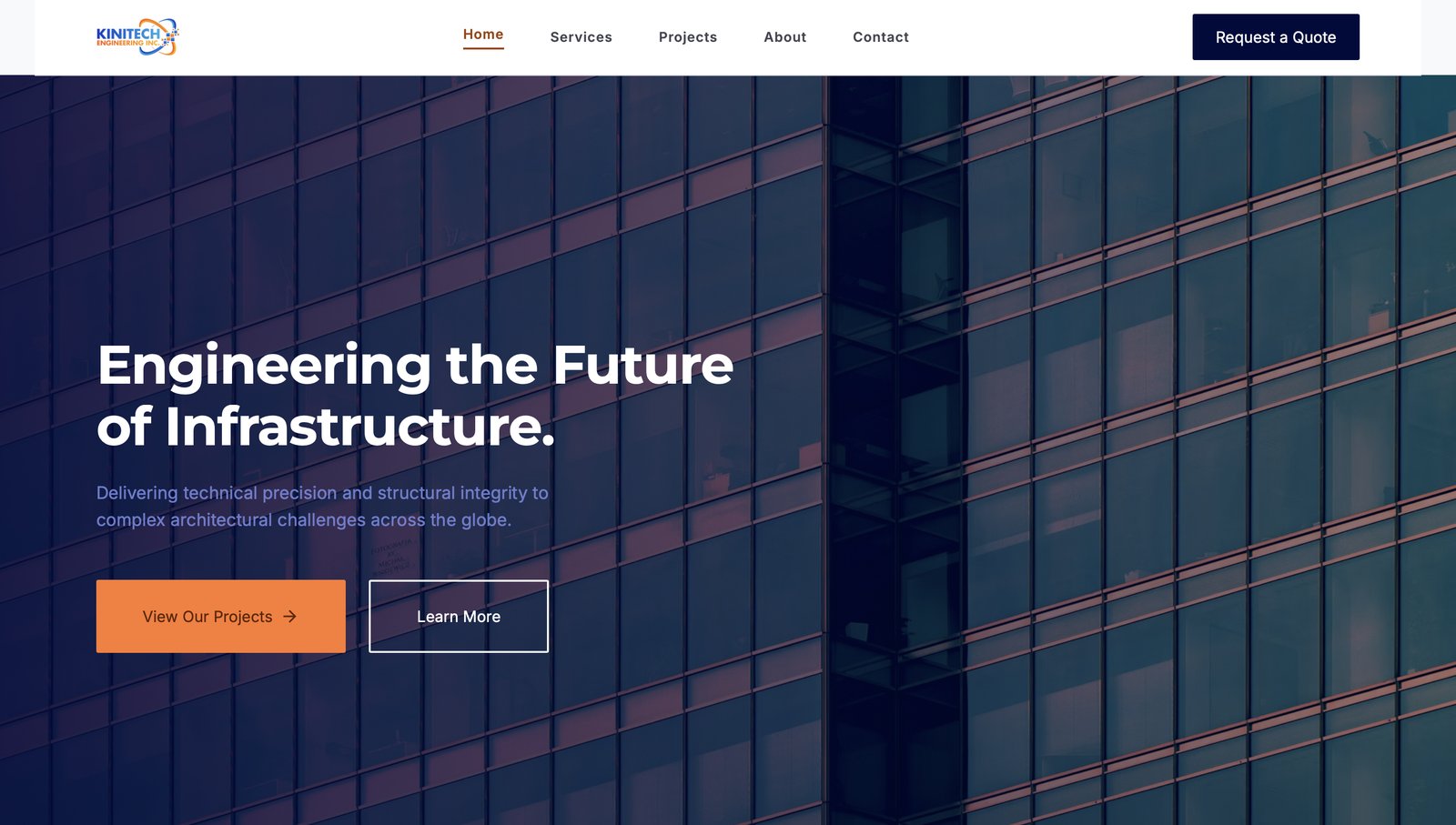
Final Homepage
The Problem
The Company Had Expertise. The Site Didn't Show It.
Kinitech's original site was a single page with limited information. A visitor couldn't quickly tell what Kinitech does, who they'd worked with, or how to start a project.
Limited Architecture
One page, minimal information, made it impossible to see the full scope of what Kinitech does.
Unclear Services
Capabilities, industries, and delivery process were never actually explained.
No Project Proof
No case-study experience, despite completed work being the strongest credibility signal available.
Generic Visuals
Stock imagery and template presentation that didn’t reflect real engineering expertise.
Weak Trust Signals
Leadership, certifications, and outcomes were missing or hard to find.
Limited Search Visibility
One page with thin content meant almost nothing for search discovery.
The Approach
Instead of “make the website look modern,” the brief became:
How might we help prospective clients understand Kinitech, trust them, and confidently take the next step?
01
Understand
What does Kinitech do?
02
Trust
Why should I consider them?
03
Act
How do I start a conversation?
No invented personas. Every decision below traces to a real business goal and a real client-side need.
Business Need
Communicate engineering capabilities.
User Need
“I need to know if this company has the expertise my project requires.”
Design Response
A Services architecture with clear categories, benefits, deliverables, and process per discipline.
Business Need
Build credibility.
User Need
“I need evidence this company has relevant experience.”
Design Response
A project structure showing the challenge, the solution, and the outcome.
Business Need
Generate inquiries.
User Need
“I need an obvious way to start a conversation.”
Design Response
Consistent inquiry CTAs and a lightweight quote-request flow.
Information Architecture
One Page, Five Destinations
Before
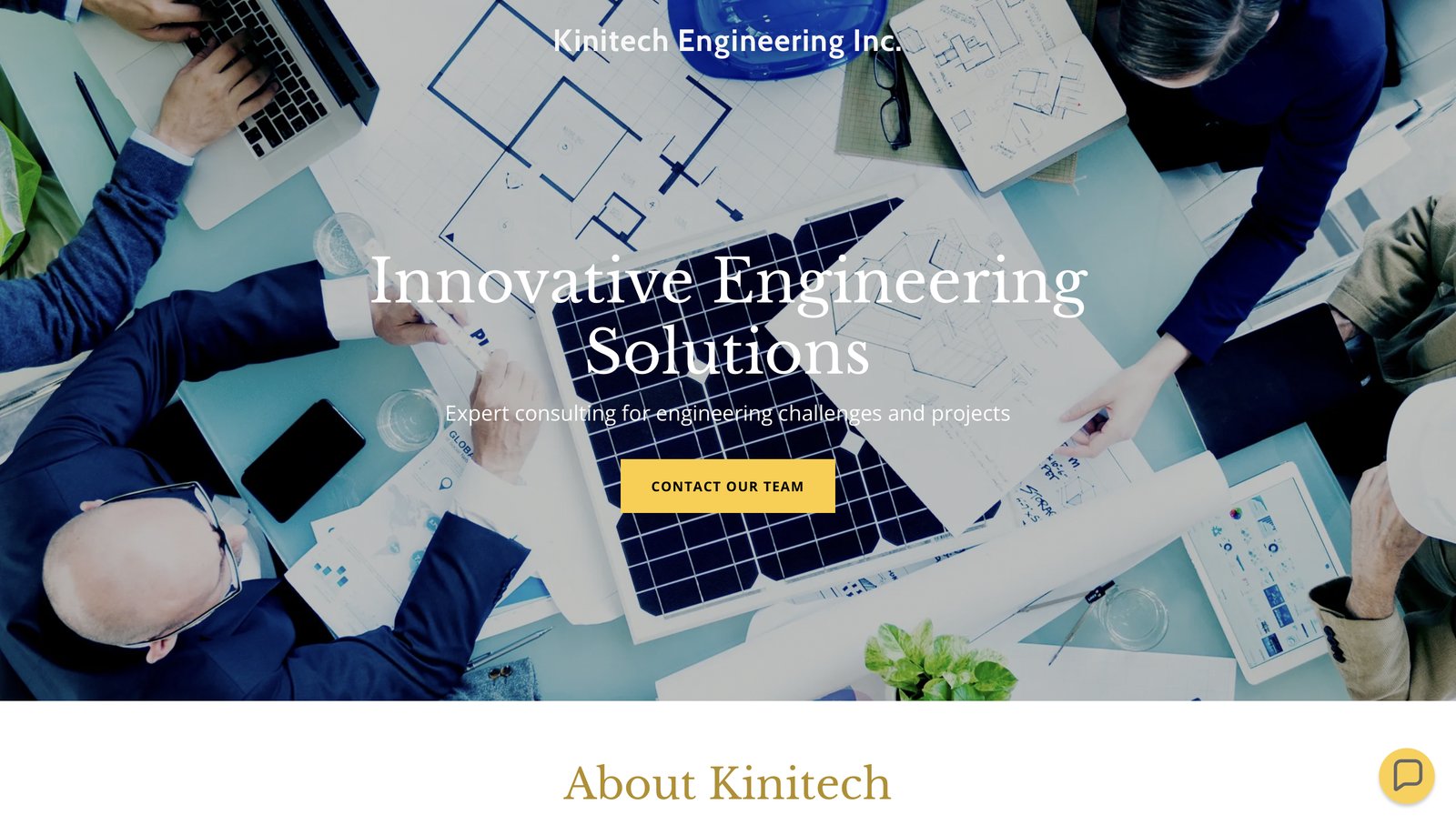
After
Home
Orient visitors, communicate the core value proposition.
About
Build trust through story, mission, and leadership.
Services
Explain capabilities in a way that’s easy to evaluate.
Projects
Provide evidence of engineering experience.
Contact
Convert interest into an inquiry.
Not just added pages: each destination was given a specific job in the client's decision journey.
Key Decisions
From Framework to Screens
The site was designed to support one decision journey end to end.
01
Land
“Who is this?”
02
Understand
“Can they help?”
03
Evaluate
“Are they relevant?”
04
Trust
“Can I trust them?”
05
Inquire
“How do I start?”
Service Discovery
One structure (Overview, Benefits, Deliverables, Process, CTA) repeated across all five disciplines: Structural Assessment, Seismic & Wind Load, Shop Drawing Review, Site Inspections, Schedule B/C-B Letters. Understand one, understand all.
Trust as a System
Client logos, leadership credentials, and company history distributed through the experience, not confined to one About page.
Project Structure
Every project follows Overview → Challenge → Solution → Outcome → Contact, so visitors see how Kinitech solves problems, not just what they built.
Engineering Process
A visible five-step process (Consultation, Assessment, Planning, Execution, Completion) that reduces uncertainty before the first call.
Inquiry Design
A persistent “Request a Quote” action in the navigation, opening a lightweight form instead of a new page. No dead ends on any high-intent page.
Real Clients on the Homepage



Real Shipped Flow
“Request a Quote” opens the same short form from anywhere on the site: Full Name, Email, Phone (optional), Project Type, Project Details. One step removed from the highest-intent action on the site.
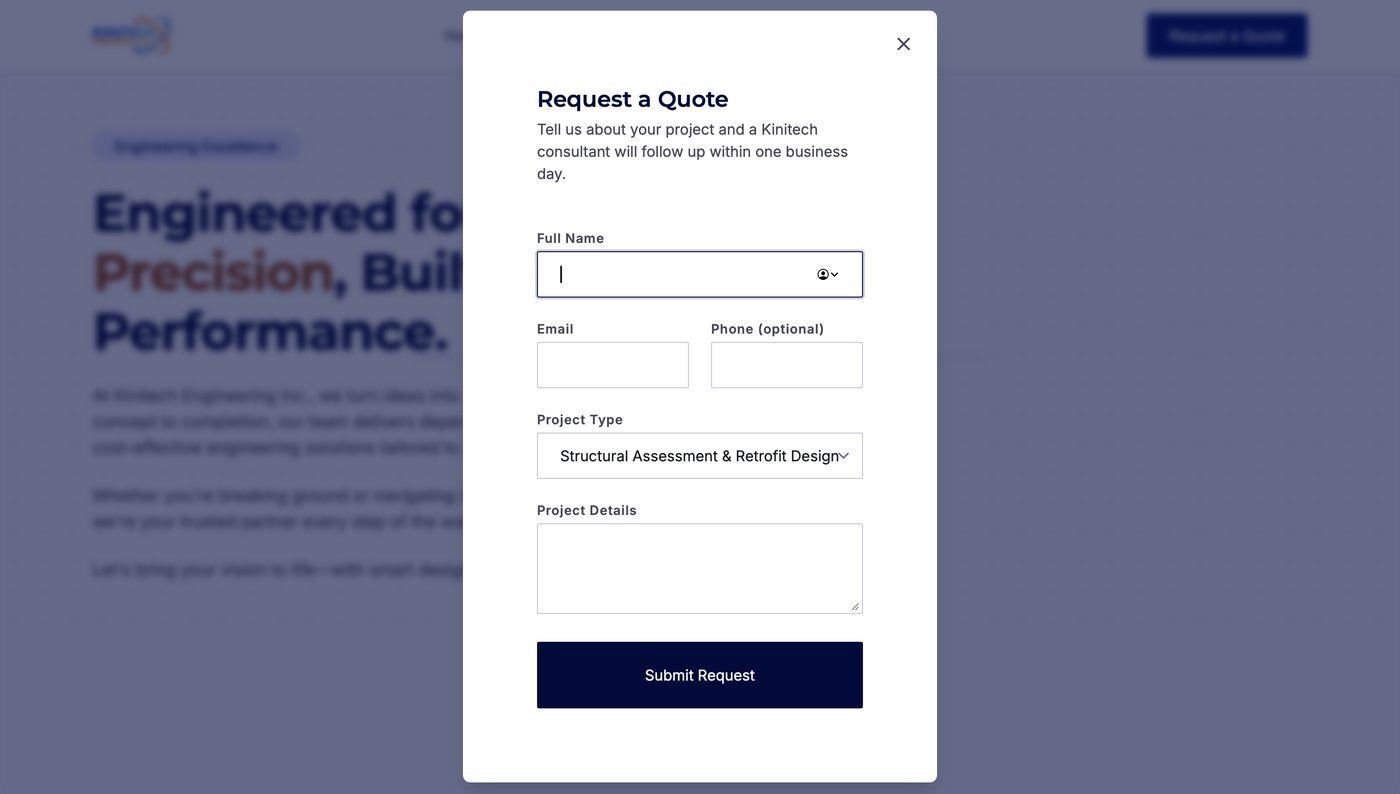
Real Quote Request Modal
Execution
The Details That Hold It Together
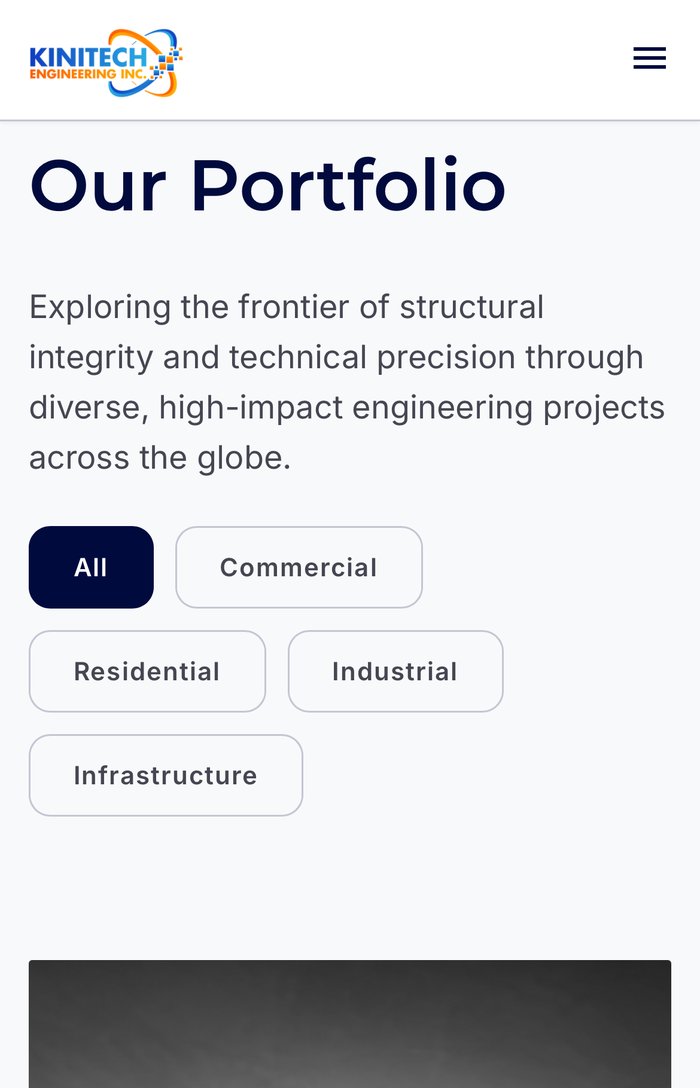
Responsive
Desktop
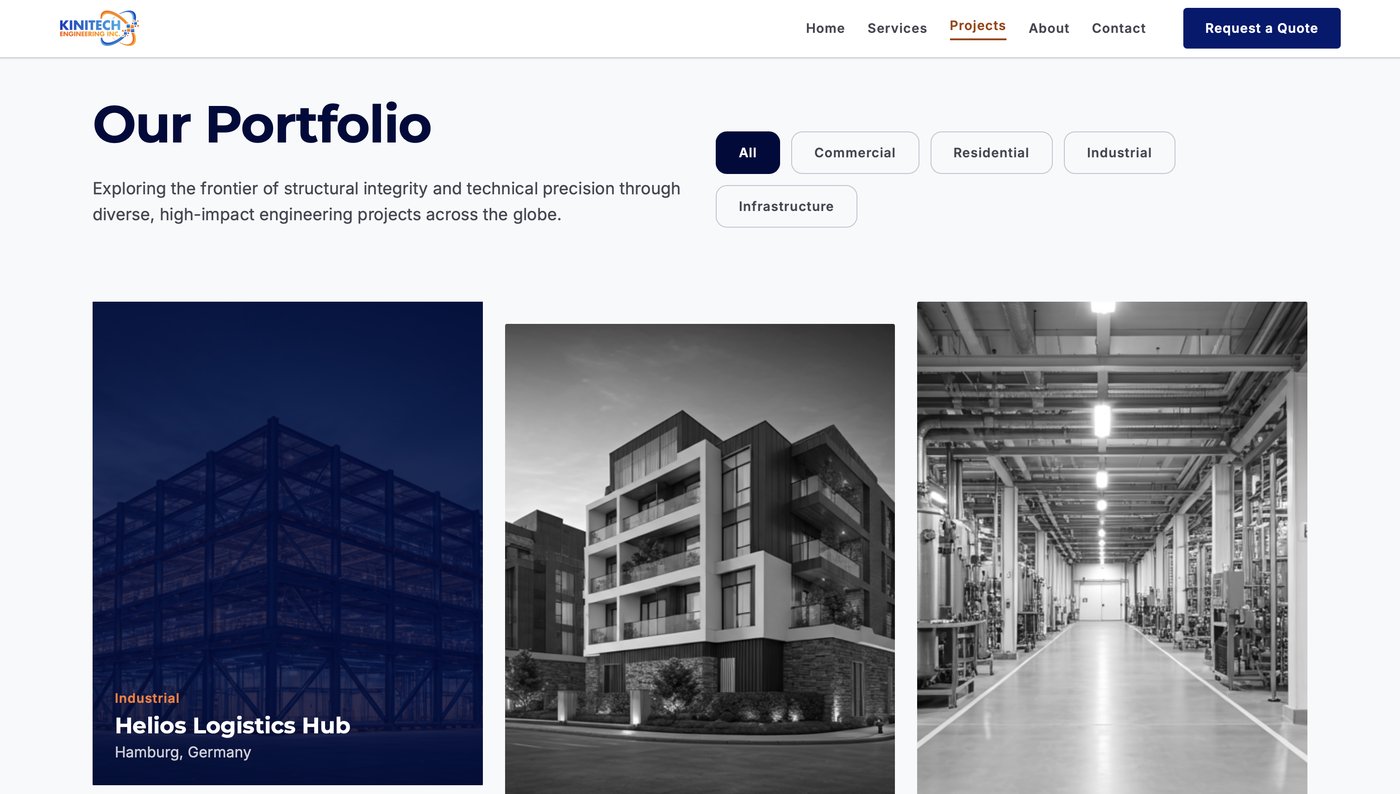
Tablet
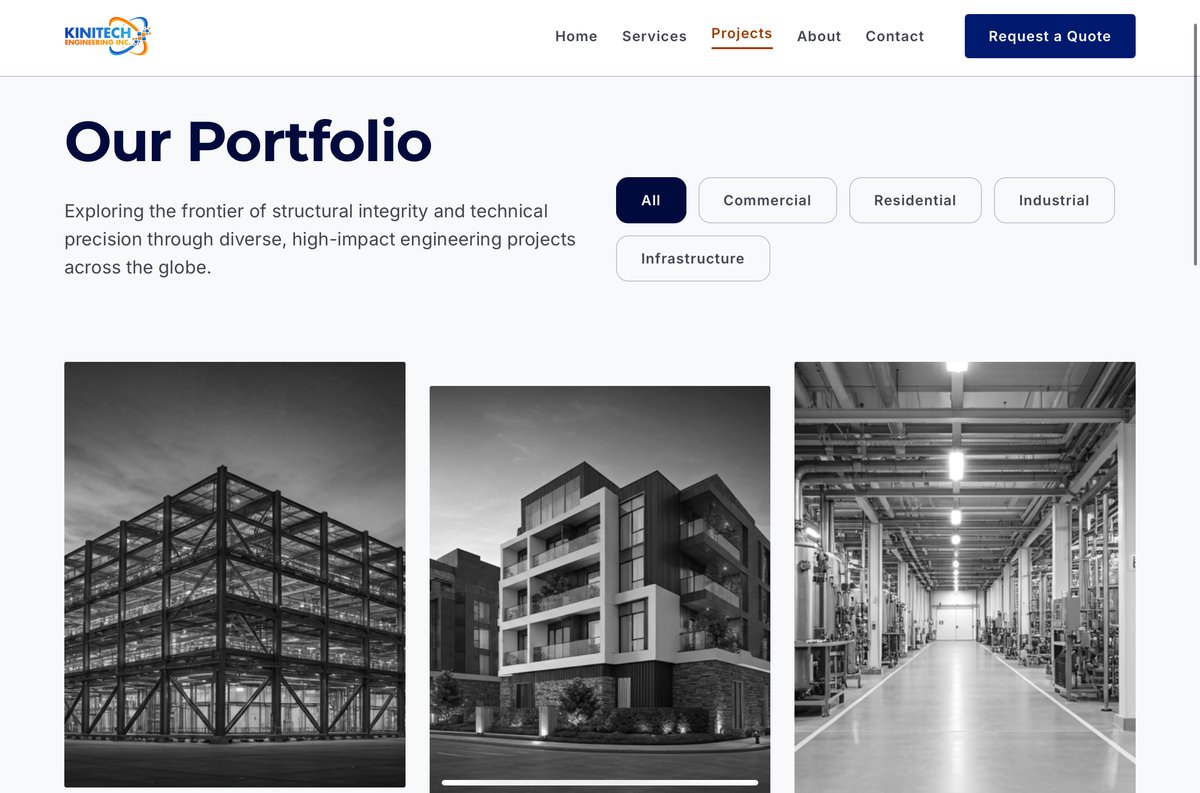
Mobile
Design System
A compact, token-based component set (surface and outline color roles, one type scale) kept the expanding site consistent.
SEO Structure
Five destinations, five descriptive titles: a structural foundation for discoverability, not a ranking claim.
Outcome
What Changed, What's Next to Prove
BEFORE
- Single-page experience
- No service breakdown
- No project showcase
- Weak trust signals
- Weak inquiry pathway
- No SEO structure
AFTER
- Five-page architecture
- Structured service discovery
- Project & success-story experience
- Distributed trust signals
- Intentional inquiry pathways
- Responsive, SEO-conscious structure
What I Would Measure, With Analytics
Future measurement criteria, no analytics-based results are claimed here.
Reflection
The Product Was Information
Kinitech reinforced that Product Design doesn't always mean a complex application. Sometimes the product problem is information: helping a visitor understand a business, evaluate its capabilities, trust it, and confidently decide what to do next. The shift here was treating the website as a decision journey rather than a collection of pages, and letting every screen answer one question in that journey.
Structure before screens
Information architecture solved the fundamental problem before visual design began.
Trust must be designed
For B2B engineering services, credibility is part of the user experience, not an add-on.
Every page needs a job
Each destination supports one specific stage of the client’s decision process.
Business and user goals align
Helping visitors understand Kinitech more clearly also drives Kinitech’s lead generation.